Archive for the ‘Original’ Category
Reporting: FAA dispute costing millions more than it would save

Did Congress really pass up more than a billion dollars in tax revenue just to save $16 million in subsidies for 13 rural airports?
The partial shutdown of operations at the Federal Aviation Administration has already cost the government far more in tax collections than what would be saved by passing the funding extension offered by House Republicans — $200 million a week and counting, potentially adding up to $1.2 billion by the time Congress can return to Washington and pass a funding bill in early September.
As with the larger deadline showdown over the debt ceiling, the reason for the standoff is more complicated than portrayed. And it may lie in Atlanta, home of Delta Air Lines, which Senate Democrats have singled out for criticism.
Full story (Alex Johnson/msnbc.com)
Right: A flight takes off past a half-completed control tower at Oakland International Airport. Construction work on the tower and on hundreds of other FAA projects has been halted. (Getty Images file)
Reporting: Porn piracy wars get personal
Cross-posted from msnbc.com’s Technolog blog, where it originally appeared. To read it in context, with all information boxes and art, click here.
Ron Jeremy is one of more than a dozen adult video stars who talked about the damage piracy can cause in public service announcements published last year by the Free Speech Coalition, the industry’s trade association.
It’s not fun, but all things considered, John Steele is OK with being a villain.
In recent months, Steele’s Chicago law firm has filed almost 100 federal lawsuits seeking to identify thousands of “John Does” who downloaded pornographic videos in violation of their producers’ copyright. Federal court records indicate that none of Steele’s cases — in fact, no case of this type ever — has ended with a verdict at trial.
Sometimes, the cases run into roadblocks from skeptical judges over jurisdiction or whether the defendants have been appropriately identified. Others end in settlements for a few thousand dollars from defendants who are relieved that they get to remain anonymous.
Reporting: Murdoch’s ‘foggy’ performance may have served him well (updated)
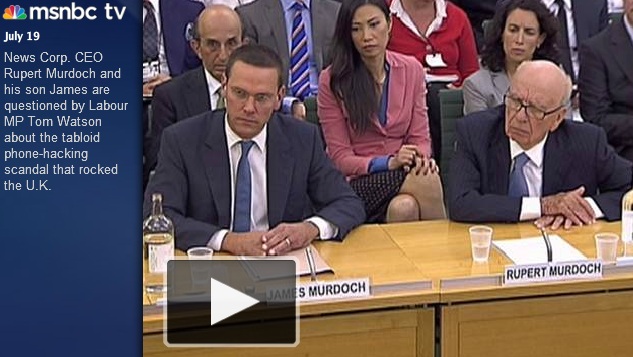 (Cross-posted from msnbc.com, where it originally appeared. To read it in context, with all information boxes and art, click here. This is a complete writethrough that significantly updates an earlier version and corrects the spelling of Milly Dowler’s first name.)
Rupert Murdoch, for decades one of the most powerful and feared media figures in the English-speaking world, appeared to many who watched his grilling Tuesday to be a confused old man. And from his standpoint, that wasn’t necessarily a bad thing, professional crisis managers said.
During 40 years running News Corp., the dominant media company in Great Britain and owner of some of the most prominent media properties in the United States, the 80-year-old Murdoch has built a legend as a man able to decide elections, change the political agenda and severely punish anyone who gets in his way.
But appearing before a committee of the British Parliament on Tuesday, Murdoch claimed to have been out of the loop while reporters for his News of the World tabloid broke into the cell phone voicemail accounts of thousands of people to get scoops, and while his company paid off British police.
FBI intends to trawl controversial immigration program
Over at Open Channel, msnbc’s investigative blog, I’ve posted a look at some internal federal documents that shed more light on Secure Communities, the ICE program that opponents say is meant to round up and deport all illegal immigrants. The FBI, it appears, is more closely involved than we previously knew for sure.
FBI intends to trawl controversial ICE program (Alex Johnson/Open Channel)
Foreign computer tech comes pre-infected for your convenience
Over at Technolog, I’ve posted a followup on amazing comments at yesterday’s House cybersecurity hearing, during which a top official of the Department of Homeland Security acknowledged that computer hardware and software is already being imported to the United States preloaded with spyware and security-sabotaging components.
U.S. official says pre-infected computer tech entering country (Alex Johnson/Technolog)
Reporting: Challenges to red light cameras span U.S.
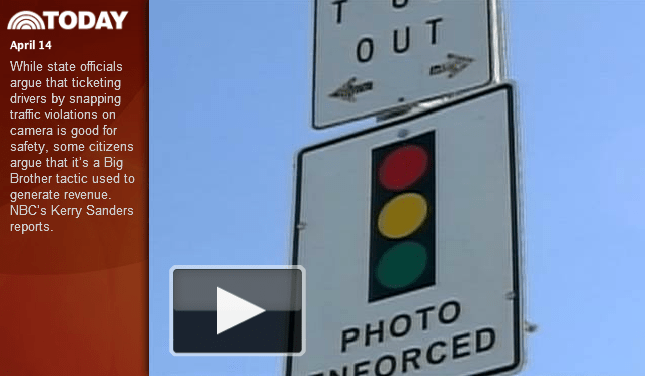 Cross-posted from msnbc.com, where it originally appeared. To read it in context, with all information boxes and art, click here.
In more than 500 cities and towns in 25 states, silent sentries keep watch over intersections, snapping photos and shooting video of drivers who run red lights. The cameras are on the job in metropolises like Houston and Chicago and in small towns like Selmer, Tenn., population 4,700, where a single camera setup monitors traffic at the intersection of U.S. Highway 64 and Mulberry Avenue.
One of the places is Los Angeles, where, if the Police Commission gets its way, the red light cameras will have to come down in a few weeks. That puts the nation’s second-largest city at the leading edge of an anti-camera movement that appears to have been gaining traction across the country in recent weeks.
A City Council committee is considering whether to continue the city’s camera contract over the objections of the commission, which voted unanimously to remove the camera system, which shoots video of cars running red lights at 32 of the city’s thousands of intersections. The private Arizona company that installed the cameras and runs the program mails off $446 tickets to their registered owners.
The company’s contract will expire at the end of July if the council can’t reach a final agreement to renew it.
Opponents of the cameras often argue that they are really just revenue engines for struggling cities and towns, silently dinging motorists for mostly minor infractions. And while guidelines issued by the National Highway Traffic Safety Administration say revenue is an invalid justification for the use of the eyes in the sky, camera-generated citations do spin off a lot of money in many cities — the nearly 400 cameras in Chicago, for example, generated more than $64 million in 2009, the last year for which complete figures were available.
Federal camera guidelines
The National Highway Traffic Safety Administration says red light cameras and other automated traffic controls should:
• Reduce the frequency of violations.
• Maximize safety improvements with the most efficient use of resources.
• Maximize public awareness and approval.
• Maximize perceived likelihood that violators will be caught.
• Enhance the capabilities of traffic law enforcement and supplement, rather than replace, traffic stops by officers.
• Emphasize deterrence rather than punishment.
• Emphasize safety rather than revenue generation.
• Maintain program transparency by educating the public about program operations and be prepared to explain and justify decisions that affect program operations.
Source: Speed Enforcement Camera Systems Operational Guidelines, National Highway Traffic Safety Administration
Los Angeles hasn’t been so lucky.
Reporting: Prices soar on the used car lot
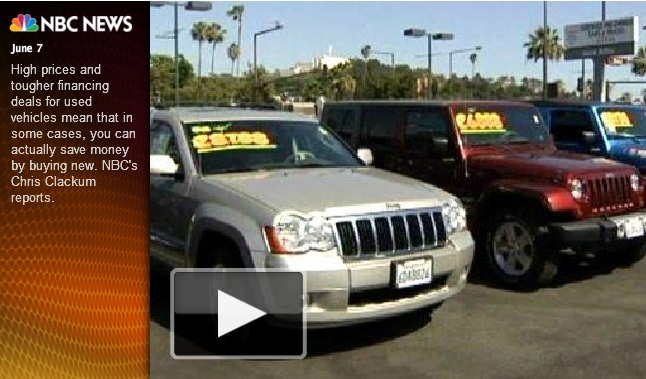 Cross-posted from msnbc.com, where it originally appeared. To read it in context, with all information boxes and art, click here.
When Debra Neel went to check out used Jeeps recently in Indianapolis, she left with a bad case of sticker shock.
“We were looking around $4,000 or $5,000 for a good used car for a teenager,” but “you can’t find them anymore,” Neel said. That was readily confirmed by Bob Falcone, president of Falcone Volkswagen, Subaru & Saab in downtown Indianapolis.
Falcone said that a couple of years ago, Neel might have been able to get the 12-year-old Jeep she was considering at her $4,000 to $5,000 price point. The 2000 model on the lot, after all, has almost 90,000 miles on it and gets only 16 miles to the gallon.
Its price tag today: $13,900.
“It’s unbelievable,” Falcone acknowledged. He said the used car market is the strongest it has ever been in his 34 years in business.
Prices to soar 30 percent year over year
Dealers and automotive analysts say it’s the same across the country. A variety of factors, including the nation’s weak economic recovery, high gasoline prices and the March 11 earthquake and tsunami in Japan, have converged in recent weeks to send demand for used vehicles skyrocketing and supply plummeting, said Jeremy Anwyl, chief executive of Edmunds.com, which tracks new and used car prices.
Reporting: Deadly virus hits horse circuit
 Cross-posted from msnbc.com, where it originally appeared. To read it in context, with all information boxes and art, click here.
Alice Rieckman has spent most of her life as a horsewoman. She runs Rieckman’s Arabians, a horse farm in Kennewick, Wash. Horses are constantly being brought in for training sessions and care or heading out for shows, but right now, none are being allowed into or out of the farm.
Washington is one of nine Western states where equine herpes virus 1, or EHV-1, has spread since it was first detected in early May at the National Cutting Horse Association Western National Championship show in Ogden, Utah. So far 75 horses have been infected, 12 of which have been put down, according to the U.S. Department of Agriculture.
None of the horses are at Rieckman’s Arabians, but Rieckman is taking no chances. She has quarantined the farm to make sure no horse that could have been at the show or exposed to one of them can endanger her animals.
“It really would be devastating to lose one or to have them get sick, because they can’t help themselves,” she said. “You know, they depend on us to keep them well.”
With the opening of the summer horse season under way, breeders, owners and exhibitors are deeply concerned. The National Cutting Horse Association has canceled all events nationwide through mid-June, hoping to to keep the virus in check.
Reporting: Police on radio scanner apps: That’s not a 10-4

Police Scanner is available for $2.99 in the iPhone App Store.
This report was cross-posted on msnbc.com’s Technolog blog. Read it in context here.
Matthew A. Hale, 29, was arrested last week in Muncie, Ind., after he allegedly fled the scene of a failed stickup at a pharmacy.
Police accused Hale of being the getaway driver for an accomplice who was supposed to rob the pharmacy. But Hale drove off when things went sour, only to be stopped and arrested shortly thereafter, they said. Bail was set this week at $25,000 on felony charges of attempted armed robbery.
It’s all pretty run-of-the-mill stuff, except for one thing: How did Hale know the heist was falling apart inside the pharmacy as he sat outside in the car?
How did he know to take off?
Matthew Hale, it turned out, had a smartphone — specifically, a Droid from Verizon Wireless. And on that Droid he had an app that he used to monitor Muncie police radio traffic, Detective Jim Johnson said.
If you’re one of the millions of smartphone users who’ve downloaded scanner apps with names like iScanner, PoliceStream and 5-0 Radio Police Scanner, pay attention:
You might be breaking the law.
Jack Daniel, Internet Cop
Part of my job requires me to review potentially interesting stories NBC’s local stations are reporting. Today, many of them picked up a short AP piece on Jack Daniel’s announcing a new, slimmer bottle for its famous Old No. 7 whiskey.
Fine, I thought. I’ll see if I can find the actual announcement on Jack Daniel’s site.
I didn’t get that far.
Like nearly all liquor companies, Jack Daniel makes you verify your age before you can get past a splash screen. That’s fine; liquor companies would want to protect themselves from complications associated with appearing to market to minors.
But Jack Daniel goes much further than that. It has a link to something called a “linking policy” on its home page, and it’s pretty amazing.
Basically, Jack Daniel says that if you want to link to its site, you have to agree to 15 conditions — among them: “You will not challenge the validity of this Agreement or its binding effect or enforceability” and “You agree not to use the link on any web site that disparages the Brand, the Site, or the Brand’s products or services.” And you must fill out a form disclosing your name, residence and e-mail address.


 Alex Johnson - Journalist at Large